For the past few years, artificial intelligence has been marketed as the ultimate productivity tool. Everywhere you look, businesses are promised the same thing: automate your work and save hours every day.
And in many ways, that promise is true.
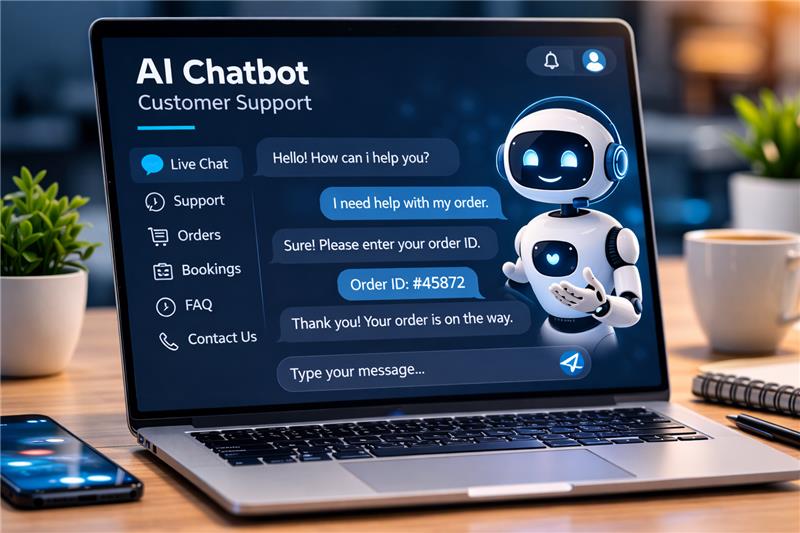
AI can handle repetitive tasks, organize data faster than humans, and respond instantly to routine inquiries. Businesses can automate lead follow-ups, schedule appointments, manage support requests, and even generate content.
But once companies start using AI seriously, they often discover something interesting.
AI doesn’t always eliminate work.
Instead, it changes the nature of the work.

From Doing the Work to Managing the System
Traditionally, teams spent time performing tasks directly.
- Writing responses.
- Sorting data.
- Updating reports.
- Following up with leads.
With AI automation, many of those tasks can run automatically in the background.
But new responsibilities appear.
Now teams spend more time reviewing outputs, monitoring workflows, refining prompts, and ensuring systems run smoothly. Instead of manually performing every step, they manage the system that performs those steps.
In other words, the role shifts from worker to operator.
This shift can feel strange at first, but it’s also where the real productivity gains happen.
Where AI Automation Actually Works Best
Not every task benefits from automation.
AI performs best when dealing with repetitive, predictable processes. These are the areas where businesses usually see the biggest return on investment.
For example:
- Lead qualification and follow-up responses
- Customer support for common questions
- Data organization and reporting
- Scheduling and notifications
- Website inquiries and contact forms
When these processes are automated properly, businesses save time and ensure that opportunities don’t get lost.
Where Businesses Often Go Wrong
Many companies rush into AI expecting instant transformation.
They install multiple tools, automate complex processes, and expect everything to work perfectly from day one.
But automation works best when the underlying workflow is already clear and structured.
If a process is messy, automating it can actually create more confusion rather than solving the problem.
Successful automation starts with understanding how the business operates, identifying bottlenecks, and then introducing the right tools at the right stage.
How Upteky Helps Businesses Use AI Automation Effectively
At Upteky, we work closely with businesses to ensure automation actually improves their workflows rather than adding unnecessary complexity.
Instead of simply introducing multiple AI tools, we first understand how a business operates, where time is being lost, and which processes can benefit most from automation. From there, we design practical automation systems that integrate smoothly into daily operations.
For example, we help businesses automate processes like lead management, website inquiries, customer support responses, scheduling, and internal reporting. These systems allow routine tasks to run automatically in the background while teams stay focused on strategic and customer-facing work.
Our approach is centered around building reliable and scalable systems, ensuring automation works consistently and supports long-term growth rather than becoming another tool that needs constant management.
Turning AI Into a Practical Business Tool
The businesses benefiting most from AI are not necessarily the ones using the most tools.
They are the ones using automation strategically.
At Upteky, we focus on helping businesses build practical systems that simplify workflows instead of complicating them. This means designing websites, automation systems, and digital processes that handle repetitive tasks while allowing teams to focus on higher-value work.
When implemented correctly, automation doesn’t replace human expertise. It supports it.
Instead of spending hours on routine tasks, teams can concentrate on strategy, creativity, and customer relationships.
The Real Future of Work with AI
AI automation isn’t about removing people from the process.
It’s about amplifying what people can do.
Businesses that learn to combine human insight with intelligent systems will be able to move faster, respond quicker, and scale more efficiently than those relying only on manual workflows.
The question is no longer whether businesses should adopt automation.
The real question is how thoughtfully they implement it.
Because when AI is used the right way, it doesn’t just reduce work.
It helps businesses focus on the work that truly matters.